AODA stands for Alcohol and Other Drug Abuse, and the "other drugs" can encompass a wide range of substances, including illegal drugs (cocaine, heroine, meth, etc.), the misuse of prescription medications (opioids, sedatives, etc.) and other substances (inhalants, tobacco/e-cigarettes/"vapes", etc.) Essentially, "other drugs" in the AODA context is an umbrella term meant to cover any substance that is being misused or is leading to dependency or abuse problems.
The Wisconsin Department of Public Instruction began its first Alcohol and Other Drug Abuse (AODA) programming in 1979. Since the inception of this work, there have been two main components that AODA programs address: (1) prevention designed to help students avoid or minimize future problems related to alcohol and other drug use, and (2) intervention programs designed to help students who are already experiencing problems. This two-pronged approach continues to be the perspective we take today.
The Impact of Substance Abuse on Youth
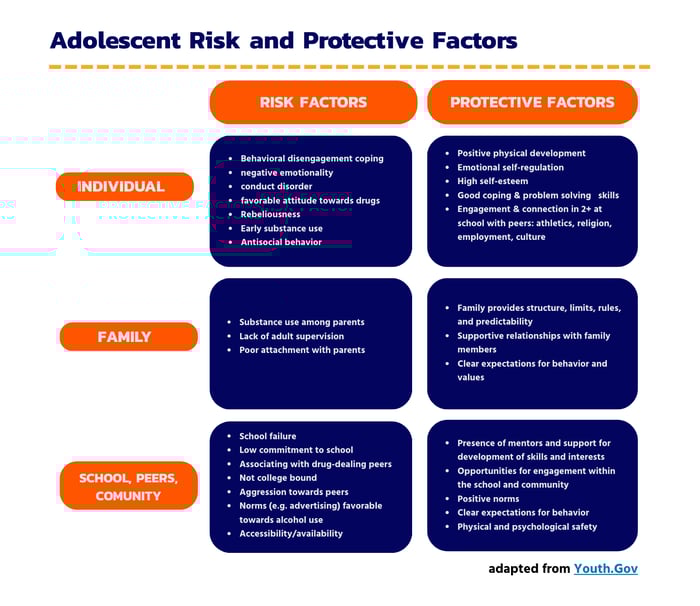
Substance abuse use among youth can lead to problems at school, cause or aggravate physical and mental health-related issues, promote poor peer relationships, cause motor-vehicle crashes, and place stress on the family. They can also develop into lifelong issues such as substance dependence, chronic health problems, and social and financial consequences.
We've learned a lot since this work came online forty-six years ago. We better understand the factors that may influence substance use and substance use disorders, both positively and negatively.
The Vaping Crisis in Schools
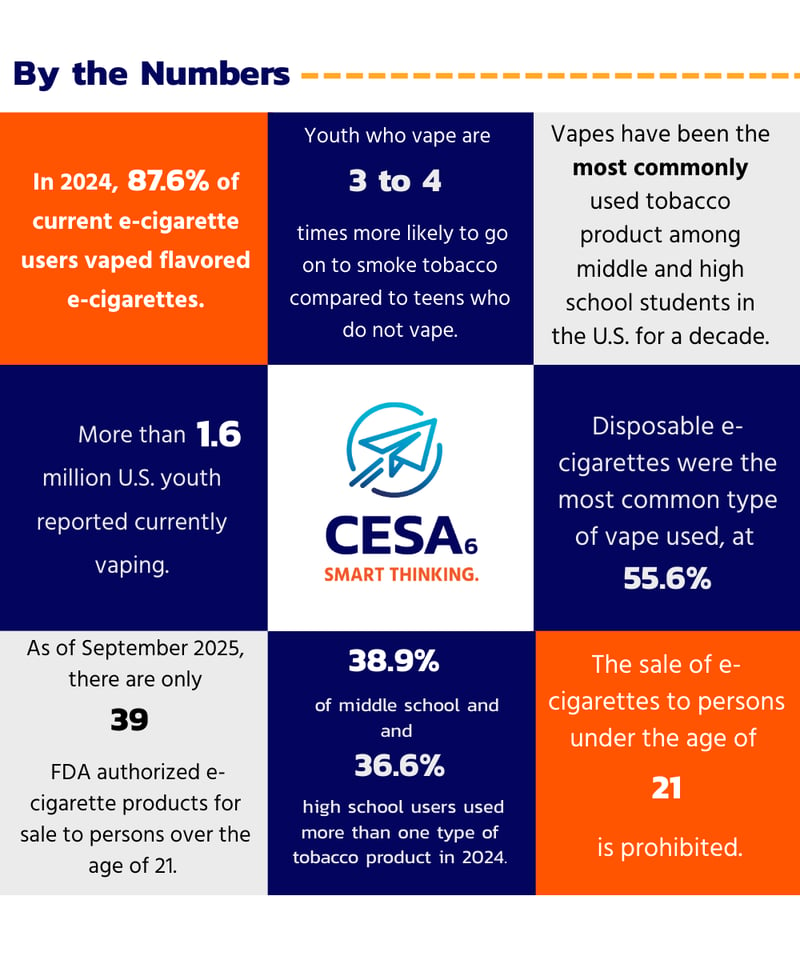
Let's talk about vaping, the most commonly used substance on school property. Kids are primarily vaping nicotine and/or THC (tetrahydrocannabinol, the psychoactive component of marijuana/cannabis), but many are also unknowingly inhaling dangerous synthetic substances like "spice" or "mamba" that are often laced into illegal vape liquids. Many teens are also under the false impression they are just vaping harmless "flavoring" or "water vapor," when the reality is that vapes can contain carcinogens like lead and other heavy metals, formaldehyde and toluene, flavorings such as diacetyl and other volatile organic compounds.
As much as 54% of vaping products sold nationally are imported and sold illegally and are unregulated by the FDA, and these products are particularly susceptible to containing dangerous compounds commonly found in industrial textiles and pesticides. AODA programs address vaping as both a form of substance use in itself and a potential gateway to the use of other substances, including alcohol, marijuana, and illicit drugs.
Vaping By the Numbers
There Is Hope
More than half of middle and high school students who currently use e-cigarettes want to quit and have tried to quit.
In 2020, 63.9% of current e-cigarette users reported wanting to quit and 67.4% reported trying to quit in the last year.
Prevention and Treatment
AODA prevention and treatment programs incorporate specific strategies to address vaping, including screening, education, counseling (individual and group), motivational interviewing, and cognitive behavioral therapy are used to help people quit vaping, similar to the methods used for other substance use disorders.
What Doesn't Work
Punitive measures (suspension, detention, isolation, removal, citations) are associated with negative life outcomes of punitive measures.
What DOES Work? It Takes a Village
Effective strategies to reduce vaping in schools include implementing clear no-vaping policies, using vape detectors, providing staff training on identifying vaping, offering student counseling and cessation programs, and incorporating vaping prevention education into the curriculum. Other helpful approaches are establishing anonymous reporting systems and teaching students refusal skills and social competence.
Policies and Enforcement
- Create and enforce a clear policy: Implement a strict, no-tolerance policy that is communicated clearly to students, parents, and staff, with consequences for violations.
- Install and use technology: Place vape detectors in bathrooms and other common areas to deter use and identify where it is happening.
- Use anonymous reporting: Set up anonymous tip lines or drop boxes so students can report vaping incidents without fear of retaliation.
Education and Prevention Programs
- Educate students: Use interactive lessons to teach students about the health risks of vaping, the tactics used by tobacco companies, and how to resist peer pressure.
- Teach refusal skills: Help students develop social competence and refusal skills through role-playing and other interactive activities.
- Implement evidence-based programs: Utilize proven prevention programs.
Support for Students
- Provide counseling and cessation programs: Offer access to resources like the Not On Tobacco (N-O-T) program to help students who want to quit.
- Develop support systems: Help students build support systems, practice healthy coping skills, and connect with resources like the CDC's Smokefree Teen and SmokefreeTXT for Teens.
Staff Training
- Train staff to recognize signs: Educate teachers and other staff on how to identify different types of vaping devices and recognize the signs of vaping.
- Involve staff in prevention: Empower staff to discuss the dangers of vaping with students and help connect them with quitting resources.
Resources for Students
Resources for Caregivers
Resources for Educators
- Educator Fact Sheet | CDC - Information about e-cigarettes educators can use when talking with their students about vaping.
- Educator Conversation Card | CDC - Conversation card educators can use when talking with their students about vaping.
- Empower Vape-Free Youth™ Campaign | CDC - Campaign resources that encourage middle and high school educators to speak with students about the risks of e-cigarettes and nicotine addiction.
- Know the Risks: A Youth Guide to E-Cigarettes Presentation | CDC - Presentation, talking points, and user guide designed for use by adults who educate or serve youth aged 11-18, such as teachers, youth ministers, coaches, other youth leaders.
- Tobacco Prevention Toolkit | Stanford University English | Spanish - Curriculums and resources created by educators, parents, youth, and researchers to help prevent middle and high school students' use of tobacco and nicotine.
- Tobacco-Free School District | American Heart Association - Model tobacco policies and administrative guidance to support school districts in creating and sustaining 100% tobacco-free school environments.
- Schools Supporting Students to Quit Tobacco Use as an Alternative to Suspension | CDC - Resource to help school administrators address youth vaping by creating supportive environments and using alternatives to school suspension.
- INDEPTH: An Alternative to Suspension or Citation | American Lung Association and West Virginia University - Education program for students that schools and communities can use to help youth make healthier choices.
- Vaping Prevention and Education Resource Center | FDA English | Spanish - Lesson plans, activity sheets, videos, and educational information for middle and high school educators to help inform students about the health consequences associated with vaping.
- Youth Vaping Prevention & Resources to Quit | Truth Initiative - Self-led, interactive curriculum that encourages youth to live vape-free lives.
- Evidence Brief: Tobacco Industry-Sponsored Youth Prevention Programs in Schools (cdc.gov) - Summary of evidence showing tobacco industry-sponsored school-based tobacco prevention programs are ineffective and may promote tobacco use among youth.


 March 24, 2025
Leave a Comment